When Lake Mary small business owners ask about S-Corp payroll vs. LLC payroll, the answers they get are usually either way too technical or dangerously oversimplified. Here’s the truth: your business structure isn’t just a legal formality. It changes everything about how you pay yourself, how much you owe in payroll taxes, and what the IRS expects from you. Whether you’re running a single-member LLC out of Lake Mary or considering an S-Corp election to save on self-employment taxes, getting this wrong can cost you thousands. Let’s break down what actually matters, in plain English.
The Real Difference Between an LLC and an S-Corp (It’s Not What Most People Think)
First, let’s clear up the biggest misconception. An LLC is a legal structure. An S-Corp is a tax classification. They’re not the same category of thing, which is why comparing them gets confusing fast.
When you form an LLC in Lake Mary, you’re creating a legal entity that protects your personal assets. By default, the IRS treats a single-member LLC as a sole proprietorship and a multi-member LLC as a partnership. You report business income on your personal return, and that’s that.
An S-Corp, on the other hand, is a tax election you make with the IRS by filing Form 2553. You can be an LLC and elect S-Corp taxation. Many Lake Mary small business owners do exactly this once their income hits a certain threshold, because it can significantly reduce what you owe in payroll taxes.
The critical difference? Once you elect S-Corp status, you’re required to run payroll. No exceptions.
How LLC Owners Pay Themselves and Why It Gets Expensive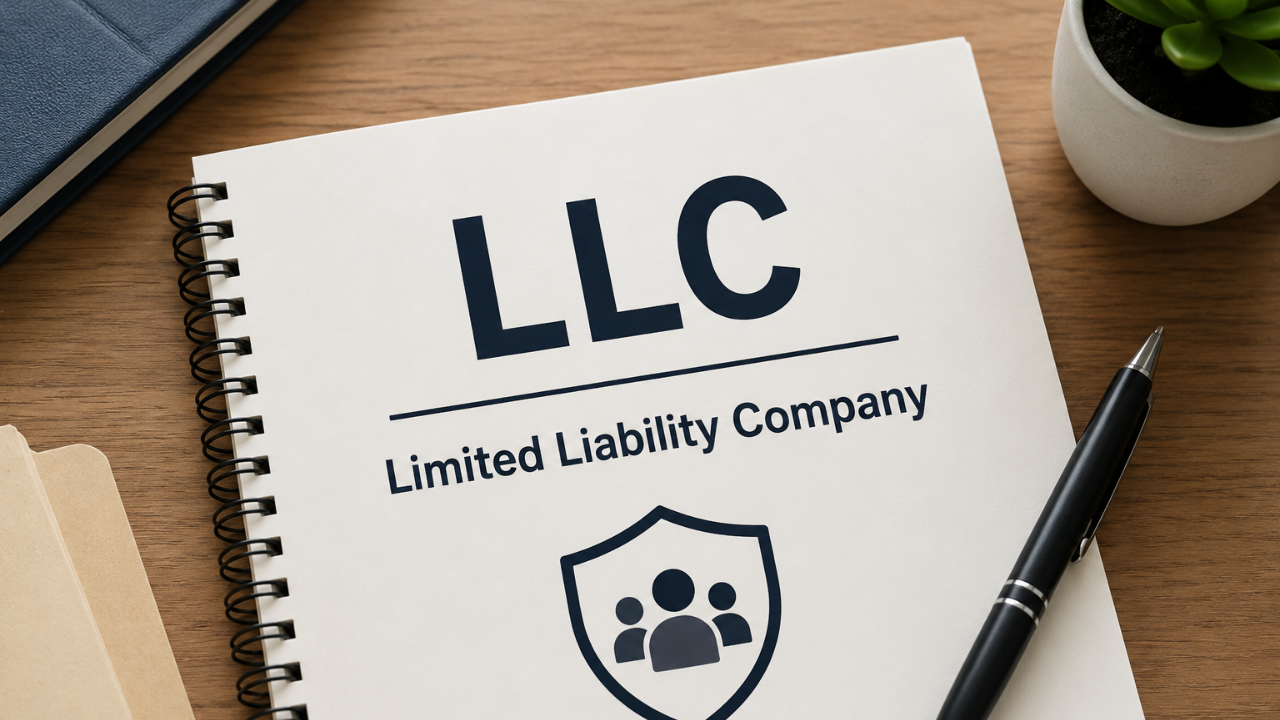
If your LLC is taxed as a sole proprietorship (the default), you don’t technically run payroll. You take owner’s draws, meaning you transfer money from the business to yourself whenever you need it.
Sounds simple, right? It is, until tax time.
Every dollar of net business income gets hit with self-employment tax at 15.3% (that’s the combined Social Security and Medicare tax). On top of that, you pay federal income tax. So if your LLC nets $120,000, you’re paying self-employment tax on the full $120,000. That’s roughly $18,360 just in self-employment taxes before your income tax bill even enters the picture.
For a lot of Lake Mary small business owners, that math starts to sting once the business is consistently profitable.
S-Corp Payroll 101: Why You Have to Pay Yourself a “Reasonable Salary”
Here’s where S-Corp payroll requirements in Lake Mary get interesting. When your LLC elects S-Corp taxation, you become an employee of your own company. The IRS requires you to pay yourself a “reasonable salary” through actual payroll, complete with W-2s, withholdings, and quarterly filings.
But here’s the benefit: only your salary is subject to payroll taxes. Anything you take above that salary comes out as a distribution, and distributions aren’t subject to that 15.3% self-employment tax.
So if your business earns $120,000 and you pay yourself a reasonable salary of $60,000, you only owe payroll taxes on the $60,000. The remaining $60,000 passes through as a distribution taxed at your regular income rate, but free from self-employment tax. That’s a potential savings of around $9,000 per year.
The Self-Employment Tax Math: Where the Real Savings Hide
Let’s put real numbers on it.
LLC (default taxation) earning $120,000 net: Self-employment tax: approximately $18,360 (15.3% of net income after the small deduction)
S-Corp with $60,000 reasonable salary and $60,000 distribution: Payroll taxes on salary: approximately $9,180 (15.3%, split between employer and employee portions) Payroll taxes on distribution: $0
Estimated annual savings: roughly $9,000
That said, running payroll has costs. You’ll need to file quarterly payroll tax returns (Form 941), pay state unemployment taxes, handle W-2 preparation, and manage compliance. This is exactly why most S-Corp owners partner with small business payroll services in Florida to handle the mechanics, so the tax savings don’t get eaten up by headaches and mistakes.
What the IRS Looks For and What Gets Small Business Owners Flagged
The IRS knows the S-Corp playbook. They’ve seen business owners pay themselves suspiciously low salaries to maximize distributions and minimize payroll taxes. If you’re running a consulting firm generating $200,000 and paying yourself $25,000, that’s a red flag.
“Reasonable salary” means compensation that’s comparable to what someone in a similar role, in a similar industry, in a similar market would earn. The IRS looks at factors like your training, experience, duties, and what comparable businesses pay for similar work. The Bureau of Labor Statistics and industry salary surveys are commonly used benchmarks.
There’s no magic formula, but there is a general rule: don’t get greedy. A salary that’s clearly below market rate invites scrutiny, and if the IRS reclassifies your distributions as wages, you’ll owe back payroll taxes plus penalties and interest.
When Does It Actually Make Sense to Switch to S-Corp Status in Lake Mary?
Not every LLC should elect S-Corp taxation. The general rule of thumb is that S-Corp election starts making financial sense when your business consistently nets around $50,000 to $60,000 or more per year after expenses. Below that, the added cost and complexity of running payroll, filing additional returns, and maintaining compliance may not be worth the tax savings.
You should also consider factors like whether you plan to bring on employees, your comfort level with payroll administration, and your long-term growth trajectory. If you’re already thinking about HR support for growing businesses, it might be a sign your business is ready for a more structured approach.
Florida doesn’t have a state income tax, which simplifies things slightly, but you’re still on the hook for federal payroll taxes, Florida unemployment tax (called Reemployment Tax), and proper registration with the Florida Department of Revenue.
Why Getting Payroll Right From Day One Matters More Than You Think
The most expensive payroll mistake isn’t choosing the wrong software. It’s setting up your structure incorrectly from the start and spending months (or years) fixing it later.
Whether you’re sticking with your LLC’s default tax treatment or electing S-Corp status, getting your payroll set up right from day one saves you from penalties, back taxes, and a lot of unnecessary stress. This includes registering with the right agencies, classifying workers correctly, calculating withholdings accurately, and filing on time every single quarter.
FAQ: S-Corp Payroll vs. LLC Payroll in Lake Mary
Do I have to run payroll if I have an LLC?
If your LLC is taxed as a sole proprietorship (the default), you typically don’t run formal payroll for yourself. You take owner’s draws. However, if you have employees or if your LLC has elected S-Corp taxation, then yes, payroll is required.
What counts as a “reasonable salary” for an S-Corp owner?
There’s no single number. The IRS expects a salary comparable to what the market pays for similar work. Factors include your industry, experience, location, hours worked, and what comparable businesses pay employees in similar roles. Salary data from the Bureau of Labor Statistics can help with benchmarking.
Can my Lake Mary LLC be taxed as an S-Corp?
Absolutely. You can keep your LLC structure for legal protection and elect S-Corp tax treatment by filing IRS Form 2553. This is one of the most common strategies Lake Mary small business owners use to reduce self-employment taxes while maintaining the flexibility of an LLC.
What happens if I skip paying myself a salary in my S-Corp?
The IRS can reclassify your distributions as wages, which means you’ll owe back payroll taxes, penalties, and interest. It’s one of the most common compliance issues with S-Corps, and it’s entirely avoidable.
How do I set up S-Corp payroll in Lake Mary?
You’ll need an EIN from the IRS, registration with the Florida Department of Revenue for Reemployment Tax, a payroll system that handles withholdings and filings, and a process for issuing W-2s at year end. Most Lake Mary small business owners work with a payroll provider to handle this rather than managing it in-house.
Find out how much you could save on payroll taxes.
Don’t Let Payroll Structure Decisions Cost You
The difference between an LLC and an S-Corp isn’t just paperwork. It’s real money, real compliance requirements, and real consequences if you get it wrong. Whether you’re figuring out a reasonable salary for your S-Corp, trying to understand your Lake Mary payroll tax obligations, or just tired of Googling your way through IRS guidelines, you don’t have to do it alone.
At Accupay, we help Central Florida small businesses set up payroll that fits their structure from day one. Learn more about how your payroll setup connects to your overall HR support for growing businesses, or get your custom payroll quote today. No pressure, just answers.